
Why Commercial-Grade Roofing Materials Are Entering the Residential Market
Homeowners with large roofs, low-slope sections, additions, garages, or mixed-use properties are increasingly turning to commercial roofing systems rather than traditional asphalt shingles. Commercial roofing materials — including TPO, EPDM rubber, standing-seam metal, and modified bitumen — offer longer lifespans, better performance on low-slope surfaces, and superior resistance to hail, wind, and UV degradation compared to standard residential shingles. For property owners managing large single-family homes, multi-family buildings, or attached commercial space, understanding these systems is essential to making a sound, long-term roofing investment.
Advertisement
Commercial Roofing Materials Compared
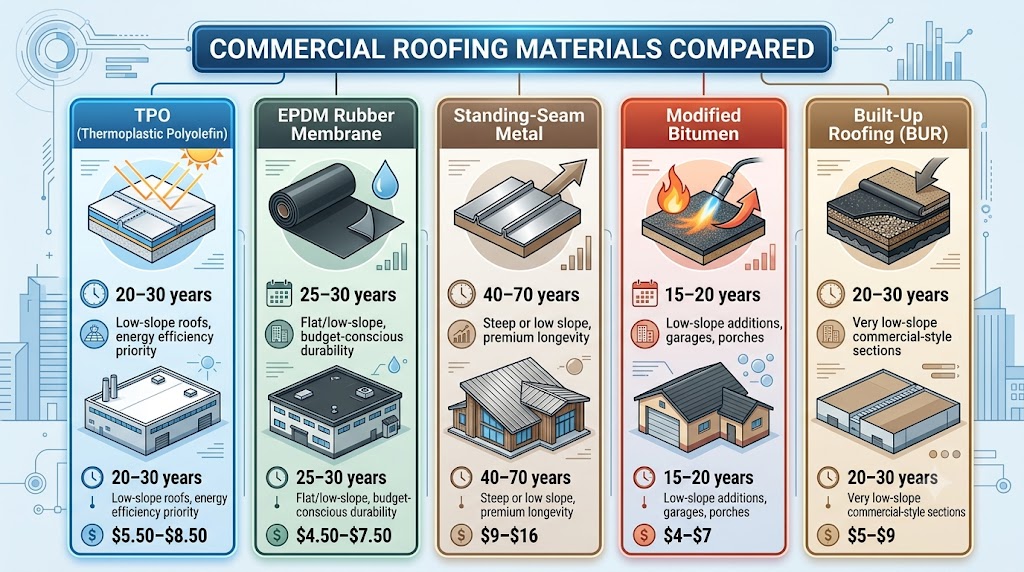
| Material | Lifespan | Best Use Case | Cost per Sq. Ft. Installed |
|---|---|---|---|
| TPO (Thermoplastic Polyolefin) | 20–30 years | Low-slope roofs, energy efficiency priority | $5.50–$8.50 |
| EPDM Rubber Membrane | 25–30 years | Flat/low-slope, budget-conscious durability | $4.50–$7.50 |
| Standing-Seam Metal | 40–70 years | Steep or low slope, premium longevity | $9–$16 |
| Modified Bitumen | 15–20 years | Low-slope additions, garages, porches | $4–$7 |
| Built-Up Roofing (BUR) | 20–30 years | Very low-slope commercial-style sections | $5–$9 |
When a Homeowner Should Consider Commercial-Grade Roofing
- Your property includes flat or low-slope sections (below 2:12 pitch) where standard shingles are not rated to perform.
- You own a multi-family or mixed-use building with combined residential and commercial roof area.
- You are located in a region with severe hail, high wind, or extreme UV exposure where extended material lifespan offsets higher upfront cost.
- You want to reduce cooling costs through reflective “cool roof” membrane technology, which can lower attic and interior temperatures significantly during summer months.
Full Cost Breakdown by Project Type
Total project cost depends heavily on roof size, slope, tear-off requirements, and structural condition. Rough national averages for a full replacement:
- Small addition or garage re-roof (under 500 sq ft): $3,000–$7,000
- Mid-size low-slope residential section (1,000–2,500 sq ft): $9,000–$25,000
- Full standing-seam metal roof replacement (2,500+ sq ft): $25,000–$65,000+
- Multi-family/mixed-use commercial roof system: $40,000–$150,000+
Tear-off and disposal of existing roofing typically adds $1–$3 per square foot, and structural repairs to decking discovered during tear-off can add unplanned costs, which is why an experienced contractor should always include a contingency line item in your proposal.
How to Evaluate a Commercial Roofing Contractor
Commercial-grade roofing systems require specialized installation expertise that differs significantly from standard asphalt shingle work. When vetting contractors, confirm the following:
- Manufacturer certification for the specific membrane or metal system being installed (many warranties are void without certified installation).
- Proof of commercial general liability insurance and workers’ compensation coverage.
- Documented experience with low-slope and flat-roof drainage design, which is far more technical than pitched-roof installation.
- A written warranty that separates material warranty (from manufacturer) from workmanship warranty (from contractor).
- References for projects of similar scale, ideally including other residential or mixed-use commercial-grade installations.
Energy Efficiency: The “Cool Roof” Advantage
Reflective commercial roofing membranes, particularly white or light-colored TPO, can reduce roof surface temperatures by 50 degrees Fahrenheit or more compared to dark asphalt shingles. This translates directly into reduced attic heat gain and lower air conditioning costs, particularly relevant for homeowners in warmer states. Many utility companies offer rebate programs for reflective roofing installations, and some jurisdictions now include cool-roof requirements in updated energy codes for low-slope roof sections.
Insurance and Warranty Considerations
Commercial-grade roofing materials often qualify for extended manufacturer warranties of 20–30 years when installed by a certified contractor, compared to the 15–25 year warranties typical of standard asphalt shingles. Additionally, impact-resistant roofing materials may qualify homeowners for insurance premium discounts in hail-prone states. Always request documentation of any applicable insurance discount programs before finalizing your roofing material selection, and confirm the warranty is transferable if you plan to sell the property.
Common Mistakes Homeowners Make When Choosing Commercial Roofing Materials
A frequent and costly mistake is selecting a roofing material based purely on upfront cost without accounting for the labor and disposal costs of a future replacement — cheaper modified bitumen systems may need replacement twice within the lifespan of a single standing-seam metal installation, ultimately costing more over a 30-year ownership period. Another common error is hiring a general residential roofing contractor for a low-slope commercial-membrane project; membrane roofing requires heat-welding or specialized adhesive expertise that a shingle-focused crew typically doesn’t possess, and improper seam work is the leading cause of premature membrane failure. Homeowners should also be cautious of contractors who provide only a verbal estimate without a written scope of work specifying membrane thickness, insulation R-value, and flashing details, as these specifications materially affect both performance and warranty eligibility. Finally, skipping a structural assessment of the roof deck before installation can lead to costly surprises mid-project if rot or inadequate decking is discovered after tear-off has already begun.
Regional and Climate-Specific Roofing Considerations
Roofing material selection should account heavily for regional climate exposure. In hail-prone states such as Texas, Colorado, and much of the Midwest, impact-resistant roofing materials rated Class 4 under UL 2218 testing standards can meaningfully reduce storm damage risk and often qualify homeowners for insurance premium discounts. In hot southern and southwestern climates, reflective “cool roof” membranes provide the greatest energy efficiency benefit, since roof surface temperature directly affects attic heat gain and air conditioning demand. Coastal properties exposed to salt air and high wind require specific corrosion-resistant fastener and flashing specifications, particularly for metal roofing systems, and should always be installed to meet local wind-uplift code requirements, which are often more stringent in hurricane-prone coastal counties than inland areas of the same state.
Understanding Roof Drainage Design for Low-Slope Sections
Unlike pitched roofs, which rely on gravity alone to shed water, low-slope and flat roof sections require deliberate drainage engineering to prevent ponding water, which accelerates membrane degradation and can lead to leaks or structural stress over time. Proper commercial-grade roofing design incorporates tapered insulation systems that create a slight slope toward drains or scuppers, along with properly sized drainage outlets calculated based on the roof’s square footage and regional rainfall intensity data. Homeowners evaluating a low-slope roofing proposal should specifically ask their contractor how drainage was calculated and whether tapered insulation is included in the scope, as this is a common area where lower-cost proposals cut corners in ways that aren’t immediately visible but significantly affect long-term performance.
Reading a Roofing Proposal Like a Professional
A trustworthy commercial roofing proposal should specify exact membrane thickness (in mils, typically 45-80 mil for TPO and EPDM systems), insulation R-value, and fastening or adhesion method, since these details significantly affect both performance and price and shouldn’t be left ambiguous in a written scope of work. For metal roofing, confirm the specific panel profile, gauge (thickness) of the metal, and finish coating system, since these specifications vary considerably between a budget-tier and premium-tier metal roofing product despite superficially similar appearance. The proposal should also clearly state tear-off and disposal responsibility, any deck repair contingency pricing, and whether the quoted price is a fixed bid or subject to change if hidden deck damage is discovered during tear-off. Finally, request the specific manufacturer warranty registration process, since many extended commercial roofing warranties require the contractor to formally register the installation with the manufacturer within a specified window after completion.
Making the Final Decision: Total Cost of Ownership
Roofing decisions are best evaluated on a cost-per-year-of-service basis rather than upfront price alone, since materials with dramatically different lifespans can have similar or even inverted cost rankings once properly annualized. A standing-seam metal roof costing considerably more upfront than modified bitumen may still represent better long-term value once its 40-70 year lifespan is factored against the modified bitumen’s 15-20 year lifespan, particularly when tear-off and disposal costs for a future replacement are included in the comparison. Homeowners should also weigh the qualitative value of reduced maintenance disruption — fewer roof replacements over a lifetime of homeownership means fewer projects requiring scheduling, disruption, and decision-making — against the higher upfront capital requirement of premium materials, a trade-off that depends significantly on individual financial circumstances and how long the homeowner expects to remain in the property.
Coordinating Roofing Projects With Insurance Timing
Homeowners planning a proactive roof replacement, rather than one prompted by storm damage, may benefit from timing the project around their insurance renewal cycle, since some carriers reassess premium discounts for impact-resistant materials or updated roofing at renewal. It’s also worth notifying your insurance agent before beginning a significant roofing upgrade, both to confirm any applicable discount eligibility and to ensure the policy’s dwelling coverage amount is updated to reflect the improved roof, which can affect claims processing in the future. Additionally, retaining copies of all product certifications and installer warranty documentation in a dedicated home maintenance file makes future insurance claims, warranty service requests, and eventual resale disclosures considerably more straightforward to manage, and is a simple habit worth adopting for any significant roofing investment.
Key Terms Glossary
- TPO (Thermoplastic Polyolefin): A single-ply reflective roofing membrane widely used on low-slope commercial and residential roofs for its energy efficiency and heat-welded seam durability.
- EPDM: A synthetic rubber roofing membrane known for flexibility, UV resistance, and long service life on low-slope applications.
- Cool Roof: A roofing system designed to reflect more sunlight and absorb less heat than standard roofing materials, reducing roof surface temperature and cooling demand.
- Tapered Insulation: Insulation manufactured in graduated thicknesses to create a slight slope on a low-slope roof, directing water toward drains and preventing ponding.
- UL 2218 Class 4: An impact-resistance rating awarded to roofing products that pass rigorous hail-impact testing, often tied to insurance premium discounts.
Frequently Asked Questions
Is commercial roofing material better than residential asphalt shingles?
For low-slope or flat sections, commercial materials like TPO and EPDM are necessary since standard shingles are not rated for slopes below roughly 2:12. For standard pitched roofs, standing-seam metal offers a significant longevity advantage over shingles, though at a higher upfront cost. Homeowners weighing this decision should also factor in their planned length of ownership, since the longevity advantage of premium materials compounds most favorably for those planning to remain in the home for many years, whereas a shorter ownership horizon may shift the calculation toward a lower-cost option.
How long does a commercial-grade roof installation take?
Most residential-scale commercial roofing projects take 3–10 days depending on size, weather, and material type, with metal roofing typically taking longer due to detailed seaming work.
Can I install commercial roofing materials myself?
This is strongly discouraged. Commercial membrane systems require heat-welding or specialized adhesive application, and improper installation is the leading cause of premature failure and voided warranties.
What roofing material offers the best return on investment?
Standing-seam metal generally offers the best long-term value due to its 40–70 year lifespan, though TPO offers strong value for low-slope sections where energy efficiency is a priority.
Do commercial roofing materials require different maintenance?
Yes, membrane roofs benefit from annual inspections to check seams and flashing, while metal roofs require periodic fastener and sealant checks, both of which are typically included in a contractor maintenance plan.
How do I know if my roof qualifies for a hail-resistance insurance discount?
Ask your contractor whether the specific product you’re considering carries a UL 2218 Class 4 impact resistance rating, then confirm with your insurance carrier whether they offer a documented premium discount for that certification in your state, since discount programs and eligibility vary by insurer.
What’s the difference between a material warranty and a workmanship warranty?
The material warranty is issued by the manufacturer and covers defects in the roofing product itself, while the workmanship warranty is issued by the installing contractor and covers installation errors; both should be requested in writing, since a material defect and an installation error are handled through entirely different claims processes.
Get Free Quotes From Certified Roofing Contractors
Because roofing represents one of the largest single investments in property maintenance, it is worth requesting detailed, itemized quotes from at least three certified commercial roofing contractors before proceeding. Compare material warranties, workmanship guarantees, and documented project experience carefully. This article may contain affiliate links to vetted roofing contractor-matching services; we may earn a commission if you request a quote through these links, at no additional cost to you.
Advertisement