
Why Homeowners Are Choosing Steel Construction
Steel-framed homes and pre-engineered metal buildings, long a staple of commercial and agricultural construction, have become an increasingly mainstream option for homeowners building custom residences, workshops, barndominiums, garages, and accessory dwelling units. The appeal is straightforward: steel framing offers superior strength-to-weight ratio, resistance to fire, pests, and rot, faster construction timelines, and increasingly competitive pricing compared to traditional wood-frame construction, particularly as lumber prices have remained volatile in recent years.
Advertisement
Steel Construction Methods Compared
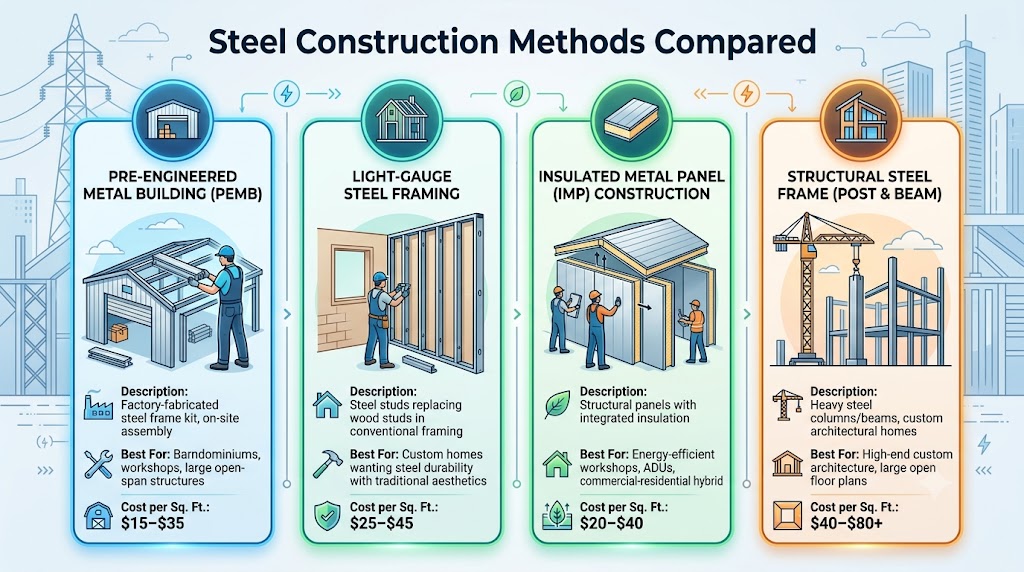
| Method | Description | Best For | Cost per Sq. Ft. |
|---|---|---|---|
| Pre-Engineered Metal Building (PEMB) | Factory-fabricated steel frame kit, on-site assembly | Barndominiums, workshops, large open-span structures | $15–$35 |
| Light-Gauge Steel Framing | Steel studs replacing wood studs in conventional framing | Custom homes wanting steel durability with traditional aesthetics | $25–$45 |
| Insulated Metal Panel (IMP) Construction | Structural panels with integrated insulation | Energy-efficient workshops, ADUs, commercial-residential hybrid | $20–$40 |
| Structural Steel Frame (Post & Beam) | Heavy steel columns/beams, custom architectural homes | High-end custom architecture, large open floor plans | $40–$80+ |
Note: figures represent shell/structure cost only; full turnkey finished cost including interior finishes, plumbing, electrical, and HVAC typically adds $80–$180+ per square foot depending on finish level.
The Barndominium Phenomenon
Barndominiums — pre-engineered metal building shells finished out as full residences — have surged in popularity due to their favorable cost-per-square-foot economics and design flexibility. A basic PEMB shell can often be erected in a matter of days to a few weeks once the foundation is complete, compared to months for comparable wood-frame construction. However, buyers should budget carefully for the “finish-out” phase — insulation, interior framing, plumbing, electrical, and finishes — which frequently represents 60-75% of total project cost even though the shell itself is comparatively affordable.
Advantages of Steel Construction
- Durability: Steel doesn’t warp, rot, or attract termites, and performs significantly better than wood framing in high-wind and seismic events when properly engineered.
- Fire resistance: Steel framing doesn’t contribute fuel to a fire, which can translate into insurance premium advantages in some markets.
- Design flexibility: Steel’s strength allows for larger clear-span open floor plans without load-bearing interior walls, popular in modern and industrial-style residential architecture.
- Construction speed: Pre-engineered kits arrive with components pre-cut and pre-drilled, significantly reducing on-site labor time compared to stick-built framing.
- Long-term maintenance: Steel exteriors, particularly standing-seam metal siding, require less ongoing maintenance than wood siding.
Important Design Considerations
- Insulation strategy: Steel is highly thermally conductive, meaning uninsulated steel framing creates significant thermal bridging; proper design requires continuous exterior insulation or thermal break strategies to achieve energy efficiency.
- Condensation management: Metal buildings are prone to condensation issues without proper vapor barrier and ventilation design, which can lead to moisture problems if overlooked.
- Acoustic performance: Metal buildings can transmit more exterior noise (rain, wind) than traditional construction unless acoustic insulation and interior finish layers are properly specified.
- Local code and zoning: Some municipalities and HOAs have specific restrictions or aesthetic requirements for metal building residential construction; this should be confirmed early in the planning process.
Full Project Cost Breakdown
- Basic PEMB shell only (2,500 sq ft): $40,000–$90,000
- Barndominium finish-out (2,500 sq ft, mid-range finishes): $180,000–$350,000 total
- Light-gauge steel-framed custom home (2,500 sq ft, full finish): $300,000–$500,000+
- Detached steel workshop/garage (1,200 sq ft, unfinished): $25,000–$55,000
Financing Considerations
Financing steel and metal buildings can be more complex than traditional construction loans, as some lenders have historically been unfamiliar with pre-engineered metal building appraisal standards. Working with a lender experienced in barndominium or metal building construction loans, and ensuring your builder provides detailed engineering documentation, generally smooths this process considerably. Some manufacturers also offer in-house or partnered financing programs specifically for their building kits.
How to Choose a Steel Building Supplier and Contractor
- Does the manufacturer provide engineer-stamped drawings certified for your specific wind, snow, and seismic zone?
- Is the contractor experienced specifically in steel building erection and finish-out, not just general residential construction?
- Does the supplier offer a documented insulation and condensation control strategy appropriate for residential use?
- What warranty is provided on the steel structure itself (many manufacturers offer 20–50 year structural warranties)?
- Can they provide references or examples of completed residential (not just agricultural/commercial) projects?
Common Mistakes Buyers Make With Steel and Metal Building Projects
A frequent and costly mistake is underestimating the finish-out budget when purchasing a pre-engineered metal building kit; the shell itself often represents a relatively small fraction of total project cost, and buyers who budget primarily around the attractive shell pricing frequently face difficult decisions or unfinished spaces when the true cost of insulation, interior framing, plumbing, electrical, and finishes becomes clear. Another common error is purchasing a building kit without confirming the engineering documentation is stamped for the specific wind, snow, and seismic loads of the actual installation site, since generic or improperly rated kits can fail to meet local code requirements, leading to costly engineering revisions or even structural concerns. Buyers should also avoid selecting a contractor solely based on steel erection experience without confirming residential finish-out expertise, since the interior build-out of a barndominium or metal home involves substantially different skills than agricultural or commercial metal building assembly. Finally, overlooking condensation control in the original design — rather than as an afterthought once moisture problems appear — is one of the most common and expensive mistakes in metal building conversions, since retrofitting proper vapor barrier and ventilation systems after the fact is considerably more disruptive and costly than incorporating them into the original design.
Regional Considerations for Steel Construction
Steel building performance and design requirements vary by region. In high-wind coastal and tornado-prone regions, steel’s strength advantage over wood framing becomes particularly valuable, though local code often requires specific engineering documentation confirming the structure meets regional wind-load requirements, which should be confirmed before purchasing any pre-engineered kit. In regions with heavy snow load, roof pitch and structural rating must account for accumulated snow weight, and buyers should confirm their chosen building’s engineering rating explicitly addresses their local snow load requirements rather than a generic national average. Humid climates require particular attention to condensation and moisture management in the building envelope design, given steel’s thermal conductivity and the potential for interior condensation without proper vapor barrier and insulation strategy.
Financing Barndominiums and Metal Homes: What Lenders Look For
Securing construction and permanent financing for barndominiums and metal homes has become considerably more accessible in recent years as these structures have gained mainstream acceptance, but lenders still typically require more detailed documentation than a standard wood-frame construction loan. This generally includes engineer-stamped structural drawings, a detailed finish-out specification and budget (not just the shell cost), and confirmation that the finished structure will meet local residential appraisal comparables, since lenders want assurance the completed property can be appraised similarly to conventional residential construction in the area. Working with a lender experienced specifically in metal building or barndominium financing, rather than a lender unfamiliar with this construction type, generally results in a smoother approval process.
Reading a Steel Building Proposal Like a Professional
A trustworthy steel building proposal should include engineer-stamped drawings specifying the exact wind, snow, and seismic loads the structure is rated for, referenced to your specific installation location rather than a generic regional average. Confirm the proposal clearly separates shell cost (steel structure, roofing, siding) from finish-out cost (insulation, interior framing, plumbing, electrical, drywall, flooring), since bundling these into a single number makes it difficult to accurately budget and compare against other construction methods. Request the specific steel gauge and coating specification (such as Galvalume or galvanized rating), since these details affect long-term corrosion resistance and aren’t always apparent from a rendering or general product description. Finally, clarify the manufacturer’s structural warranty terms and whether the finish-out contractor’s workmanship warranty is separate from the steel structure warranty, since a dispute involving one component shouldn’t necessarily affect coverage for the other.
Making the Final Decision: Budget for the Whole Project
The single most important discipline for steel and metal building buyers is budgeting for the complete finished project from the outset, rather than anchoring expectations around the attractively low shell-only pricing that’s often the headline figure in marketing materials. Requesting a detailed, itemized estimate covering foundation, shell, and full finish-out — even in preliminary form — before committing to a shell purchase helps ensure the overall project remains within budget and avoids the difficult position of an unfinished or under-finished structure due to underestimated total project cost.
Coordinating Steel Construction With Local Zoning and HOA Review
Before finalizing plans for a steel or metal home, confirm your local zoning ordinances and any applicable HOA architectural guidelines explicitly permit this construction type, since some jurisdictions and communities have specific aesthetic or material restrictions that could affect project feasibility. Addressing this confirmation early in the planning process, before committing to building kit purchase or significant design investment, avoids the costly possibility of discovering a zoning conflict after the project is already underway. Some jurisdictions also apply different setback or exterior material requirements to metal construction compared to traditional wood-frame homes, another detail worth confirming with your local building department before finalizing site plans.
Key Terms Glossary
- PEMB (Pre-Engineered Metal Building): A factory-fabricated steel building kit with components pre-cut and pre-drilled for on-site assembly.
- Barndominium: A residential structure built using a pre-engineered metal building shell, finished out as a full living space.
- Galvalume/Galvanized Coating: Corrosion-resistant coatings applied to steel building components to protect against rust over decades of service.
- Insulated Metal Panel (IMP): A structural building panel with insulation integrated between two metal skins, combining structure and insulation in one product.
Frequently Asked Questions
Is a steel-framed home cheaper than a wood-framed home?
The structural shell is often comparable or slightly less expensive, particularly for pre-engineered buildings, but total finished cost depends heavily on finish level; steel’s main cost advantage tends to be in construction speed and long-term durability rather than dramatically lower total cost. Buyers should request itemized quotes covering both shell and finish-out before drawing firm conclusions about overall project economics compared to a traditional wood-frame build.
Do steel homes rust over time?
Modern steel building components use galvanized or Galvalume coatings specifically engineered to resist corrosion for decades; proper coating specification and occasional maintenance inspection are important to maintaining this protection.
Can a steel building be insured like a traditional home?
Yes, most major insurance carriers now insure steel-framed and barndominium residences, though it’s worth confirming coverage terms with your specific carrier, as underwriting familiarity varies by company and region.
How long does it take to build a barndominium?
Shell erection typically takes 1–4 weeks once the foundation is complete, while full finish-out to a move-in-ready home typically takes an additional 4–8 months depending on scope and finish level.
Are steel buildings more energy efficient than wood-framed homes?
Not automatically — this depends entirely on the insulation strategy used, since steel’s thermal conductivity requires careful design (continuous exterior insulation, thermal breaks) to achieve efficiency comparable to or better than wood framing.
Can I get a traditional mortgage for a barndominium?
Yes, though it’s important to work with a lender specifically experienced in metal building or barndominium financing, since documentation requirements and appraisal considerations differ somewhat from a standard wood-frame construction loan.
How does the resale value of a barndominium compare to a traditional home?
Resale value varies significantly by local market acceptance and comparable sales data; in regions where barndominiums have become common, resale value tends to track closer to conventional homes, while in markets less familiar with the style, appraisal and resale comparisons can be more challenging, which is worth researching in your specific local market before building.
Get Quotes From Steel Building Suppliers and Contractors
Because steel and metal building projects involve both a manufacturer supplying the structural kit and a separate contractor handling site work and finish-out, it’s worth requesting quotes for both components from multiple qualified providers. Compare engineering documentation, structural warranties, and finish-out contractor experience carefully before committing. This article may contain affiliate links to vetted steel building supplier and contractor-matching services; we may earn a commission if you request a quote through these links, at no additional cost to you.
Advertisement