
Why Insulation Is the Highest-ROI Energy Investment Most Homeowners Overlook
While solar panels and high-efficiency HVAC systems get most of the attention in energy efficiency conversations, proper insulation is consistently rated by energy auditors as one of the highest return-on-investment upgrades available to homeowners. Industrial-grade insulation materials — spray foam, mineral wool, and rigid foam board originally developed for commercial and industrial building envelopes — are increasingly used in residential construction and retrofits because of their superior R-value per inch, air-sealing performance, and moisture resistance compared to traditional fiberglass batts.
Advertisement
Insulation Materials Compared
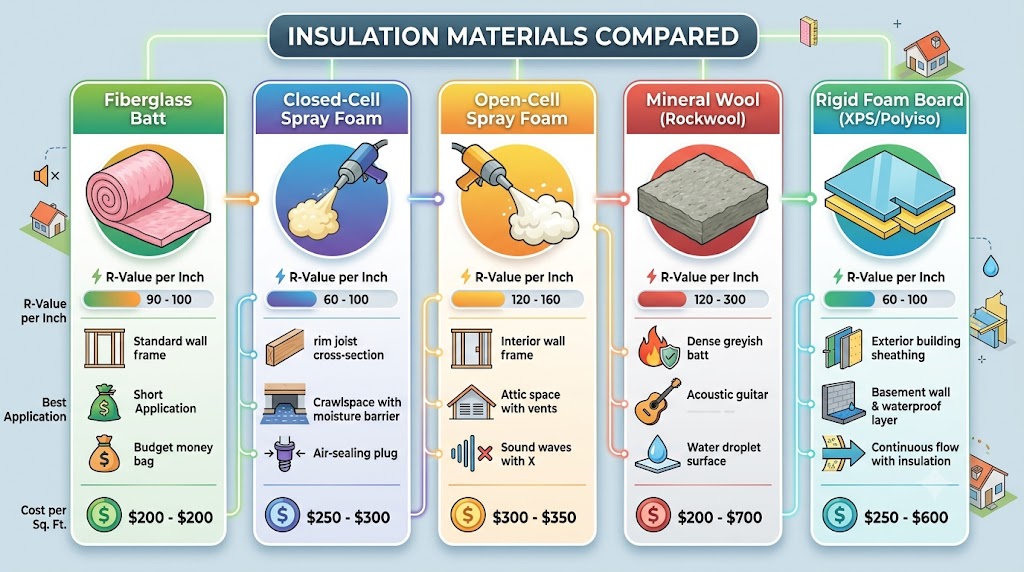
| Material | R-Value per Inch | Best Application | Cost per Sq. Ft. |
|---|---|---|---|
| Fiberglass Batt | R-2.9–R-3.8 | Standard wall cavities, budget projects | $0.50–$1.50 |
| Closed-Cell Spray Foam | R-6.0–R-7.0 | Rim joists, crawlspaces, air sealing critical areas | $1.50–$3.50 |
| Open-Cell Spray Foam | R-3.5–R-3.8 | Interior walls, attics, sound dampening | $1.00–$2.50 |
| Mineral Wool (Rockwool) | R-3.0–R-4.2 | Fire-resistant zones, sound control, moisture-prone areas | $1.20–$2.80 |
| Rigid Foam Board (XPS/Polyiso) | R-4.5–R-6.5 | Exterior sheathing, basement walls, continuous insulation | $1.00–$3.00 |
Why Air Sealing Matters as Much as R-Value
Insulation R-value measures resistance to heat conduction, but air leakage — uncontrolled air movement through gaps, penetrations, and poorly sealed assemblies — is often responsible for a larger share of energy loss than insufficient insulation alone. Industrial-grade spray foam is particularly effective because it simultaneously insulates and air-seals in a single application, unlike batt insulation, which does nothing to stop air movement around it. A professional blower door test, typically performed as part of a home energy audit, quantifies a home’s air leakage rate and identifies priority areas for sealing before insulation upgrades are performed.
Where Industrial-Grade Insulation Delivers the Most Value
- Rim joists and band boards: A major, often-overlooked source of air leakage and heat loss, ideal for closed-cell spray foam application.
- Crawlspaces: Encapsulation combined with closed-cell foam significantly reduces moisture issues and floor-level cold air infiltration.
- Attics: Spray foam applied directly to the roof deck (creating a “conditioned attic”) can outperform traditional attic floor insulation, particularly for homes with HVAC equipment or ductwork located in the attic.
- Basement walls: Rigid foam board provides continuous insulation without the moisture retention risk associated with fiberglass in below-grade applications.
- Exterior wall sheathing (new construction/major renovation): Continuous rigid foam exterior insulation eliminates thermal bridging through wall studs, a significant efficiency gain unavailable with cavity insulation alone.
Full Project Cost Breakdown
- Attic insulation upgrade (1,500–2,500 sq ft): $1,700–$5,500
- Crawlspace encapsulation with spray foam: $3,500–$9,000
- Whole-home spray foam retrofit (walls and attic): $10,000–$30,000+
- Rim joist spray foam sealing (standalone project): $800–$2,500
- New construction continuous exterior rigid foam: $2–$4 per sq ft of exterior wall area
Energy Savings and Payback Period
The Department of Energy estimates that proper air sealing and insulation upgrades can reduce heating and cooling costs by 10–20% in a typical older home, with the payback period for insulation upgrades generally ranging from 3–7 years depending on climate zone, existing insulation condition, and local energy costs. Homes in extreme climate zones — very cold or very hot regions — typically see faster payback due to higher baseline heating/cooling loads.
How to Choose an Insulation Contractor
- Do they perform a home energy audit or blower door test before recommending a specific insulation package, rather than a generic one-size-fits-all quote?
- Are spray foam installers certified by the foam manufacturer, and do they follow proper ventilation and curing safety protocols?
- Do they address moisture and ventilation planning alongside insulation, particularly for crawlspace and attic projects where improper sealing can trap moisture?
- What R-value and coverage specifications are included in the written proposal, and do they match your climate zone’s recommended targets?
- Do they offer post-installation verification, such as a follow-up blower door test to confirm air sealing performance?
Rebates and Incentive Programs
Insulation upgrades frequently qualify for federal energy efficiency tax credits as well as state and utility-sponsored rebate programs, some of which are specifically tied to verified air sealing performance improvements. Many utility companies also offer free or discounted home energy audits, which can identify the highest-priority insulation investments before you commit to a full project scope. Homeowners should research available programs in their state before finalizing a contractor proposal, as incentives can meaningfully offset project cost.
Common Mistakes Homeowners Make With Insulation Projects
A frequent mistake is adding insulation without first addressing air sealing, resulting in disappointing energy savings despite a meaningful investment; insulation slows heat conduction, but it does nothing to stop air leakage through gaps and penetrations, meaning a poorly sealed home can still lose significant energy even after an insulation upgrade. Another common error is over-insulating an attic while ignoring rim joists and crawlspaces, which are frequently responsible for a disproportionate share of a home’s total energy loss relative to their surface area, yet are often overlooked in favor of more visible attic projects. Homeowners should also avoid contractors who provide a quote without first assessing existing insulation levels and identifying specific problem areas through a blower door test or thermal imaging, since a generic “blow more insulation in the attic” recommendation may not address the home’s actual highest-priority efficiency issues. Finally, DIY spray foam kits, while marketed as an accessible option, frequently result in inconsistent coverage and improper mixing ratios compared to professional application, which can affect both performance and long-term durability of the insulation.
Climate Zone-Specific Insulation Recommendations
The Department of Energy publishes recommended insulation R-values by climate zone, and these targets vary considerably across the country. Homes in the coldest northern climate zones typically warrant attic insulation levels of R-49 to R-60, while homes in milder southern climate zones may achieve adequate performance at R-30 to R-38, reflecting the different heating load each region experiences. Wall insulation recommendations similarly vary, generally ranging from R-13 to R-21 depending on climate zone and wall construction type. Homeowners should confirm their specific climate zone designation (available through Department of Energy resources) and compare their home’s existing insulation levels against the current recommended targets, since many older homes were built to insulation standards significantly below today’s recommendations, even in regions with substantial heating or cooling demand.
Insulation and Indoor Comfort Beyond Energy Bills
While energy cost savings often drive insulation upgrade decisions, improved insulation and air sealing also deliver meaningful comfort benefits that are easy to overlook in a pure cost-benefit analysis: more consistent room-to-room temperatures, reduced drafts near windows and exterior walls, and improved sound dampening between rooms and from outdoor noise sources. Homes with significant temperature variation between floors or rooms — a common complaint in older or larger homes — frequently see meaningful improvement after a targeted insulation and air sealing project, even when the overall square footage and existing HVAC equipment remain unchanged, since inconsistent insulation is a frequent root cause of uneven temperature distribution throughout a home.
Reading an Insulation Proposal Like a Professional
A trustworthy insulation proposal should specify the exact target R-value for each area of the home (attic, walls, crawlspace) referenced against your specific climate zone’s recommended target, rather than a vague reference to “upgraded insulation.” For spray foam projects, confirm the proposal specifies open-cell versus closed-cell foam for each application area, since these have meaningfully different R-values, vapor permeability, and cost, and mixing them up in the wrong location can create moisture problems. Request documentation of pre- and post-project blower door test results if air sealing is included, since this is the most objective way to verify the work actually reduced air leakage rather than relying on a general assurance that sealing was performed. Finally, ask specifically how existing insulation will be handled — removed and replaced, or supplemented — since simply adding new insulation over degraded or moisture-damaged existing material can trap problems rather than resolve them.
Making the Final Decision: Prioritizing Your Investment
For homeowners with a limited initial budget, prioritizing projects by expected return generally means starting with air sealing and attic insulation, which typically deliver the highest efficiency improvement per dollar invested, before moving to more involved projects like whole-wall spray foam retrofits or exterior continuous insulation during a future renovation. A professional energy audit remains the most reliable way to establish this priority order for your specific home, since generic advice about which upgrade delivers the best return can vary considerably based on a home’s existing insulation condition, age, and regional climate demands.
Coordinating Insulation Upgrades With Other Renovation Work
Insulation upgrades are often most cost-effective when coordinated alongside other renovation work that already involves opening walls or accessing attic and crawlspace areas, since this shared access can meaningfully reduce the incremental labor cost of the insulation work itself. Homeowners planning a kitchen remodel, room addition, or other significant renovation should discuss insulation upgrade opportunities with their contractor early in the planning process, since this coordination is considerably more cost-effective than addressing insulation as a fully separate, standalone project at a later date. This same coordination principle applies to attic and basement finishing projects, which frequently present a natural opportunity to upgrade insulation as part of the broader scope of work.
Key Terms Glossary
- R-Value: A measure of a material’s resistance to heat conduction; higher R-values indicate better insulating performance.
- Blower Door Test: A diagnostic test using a calibrated fan to depressurize a home and measure its overall air leakage rate.
- Closed-Cell vs. Open-Cell Spray Foam: Closed-cell foam is denser, offers higher R-value per inch, and includes vapor barrier properties; open-cell foam is less dense, more affordable, and better for sound dampening.
- Thermal Bridging: Heat transfer through a more conductive material (like a wood or steel stud) that bypasses surrounding insulation, reducing overall wall assembly efficiency.
Frequently Asked Questions
Is spray foam insulation worth the higher cost compared to fiberglass?
For areas requiring air sealing in addition to insulation — rim joists, crawlspaces, irregular cavities — spray foam’s dual function typically justifies the premium. For simple, easily accessible open wall cavities, fiberglass or mineral wool may offer comparable value at lower cost.
How do I know if my home has an insulation problem?
Signs include uneven room temperatures, high heating/cooling bills relative to home size, ice damming on the roof in winter, and drafts near outlets, windows, or baseboards. A professional home energy audit provides definitive data.
Can insulation be added without removing drywall?
Yes, in many cases. Blown-in insulation can be added to existing wall cavities through small access holes, and attic and crawlspace insulation typically doesn’t require any drywall removal.
Does spray foam insulation cause moisture problems?
Improperly designed spray foam applications, particularly in unvented assemblies, can occasionally contribute to moisture issues if the overall building assembly isn’t correctly designed. This is why proper contractor expertise and building science knowledge matters significantly for this material.
How long does professional insulation installation take?
Most residential insulation projects, including attic and crawlspace work, are completed within 1–3 days depending on home size and scope.
What is a blower door test and do I need one before an insulation project?
A blower door test uses a calibrated fan temporarily installed in an exterior door to depressurize the home and measure its overall air leakage rate; while not strictly required, it’s strongly recommended before a significant insulation investment since it identifies specific leakage locations and provides a baseline to measure improvement after the project is complete.
How do I know if my current insulation has settled or degraded over time?
Blown-in fiberglass and cellulose insulation can settle over time, reducing effective R-value below the originally installed level; a visual attic inspection comparing current insulation depth to the manufacturer’s coverage chart, or a professional energy audit, can identify whether settling has occurred and top-off insulation is warranted.
Request a Home Energy Audit and Insulation Quote
Because the right insulation strategy depends heavily on your home’s specific construction, climate zone, and existing conditions, a professional energy audit is the most reliable starting point before requesting insulation quotes. Compare proposals from multiple certified insulation contractors, and confirm each includes a clear R-value and air-sealing scope. This article may contain affiliate links to vetted insulation contractor-matching services; we may earn a commission if you request a quote through these links, at no additional cost to you.
Advertisement