
Why Whole-House Generators Have Become a Must-Have Investment
Power outages are no longer a rare inconvenience. Between aging grid infrastructure, extreme weather events, and rising demand on electrical systems across the United States, homeowners and commercial property managers are increasingly treating backup power as essential infrastructure rather than a luxury. A whole-house generator is a permanently installed system that automatically detects a utility outage and restores power to your home or facility within seconds, keeping HVAC systems, refrigeration, security systems, medical equipment, and business operations running without interruption.
Advertisement
Unlike portable generators, which require manual setup, fuel refills, and extension cords, whole-house (or “standby”) generators are hardwired into your electrical panel and connected to a dedicated fuel source, typically natural gas or liquid propane. For property owners who cannot afford downtime — whether due to medical needs, remote work, food storage, or business continuity — this category represents one of the highest-value home infrastructure upgrades available today.
How Whole-House Generators Work
A standby generator system consists of three core components: the generator unit itself, an automatic transfer switch (ATS), and a fuel supply line. When utility power fails, the ATS detects the outage within seconds, signals the generator to start, and switches your home’s electrical load from the grid to the generator. When utility power returns, the system automatically switches back and shuts the generator down. The entire process is seamless and requires no manual intervention, which is critical for properties with sump pumps, medical devices, security systems, or server equipment that cannot tolerate extended downtime.
Types of Backup Generators Compared
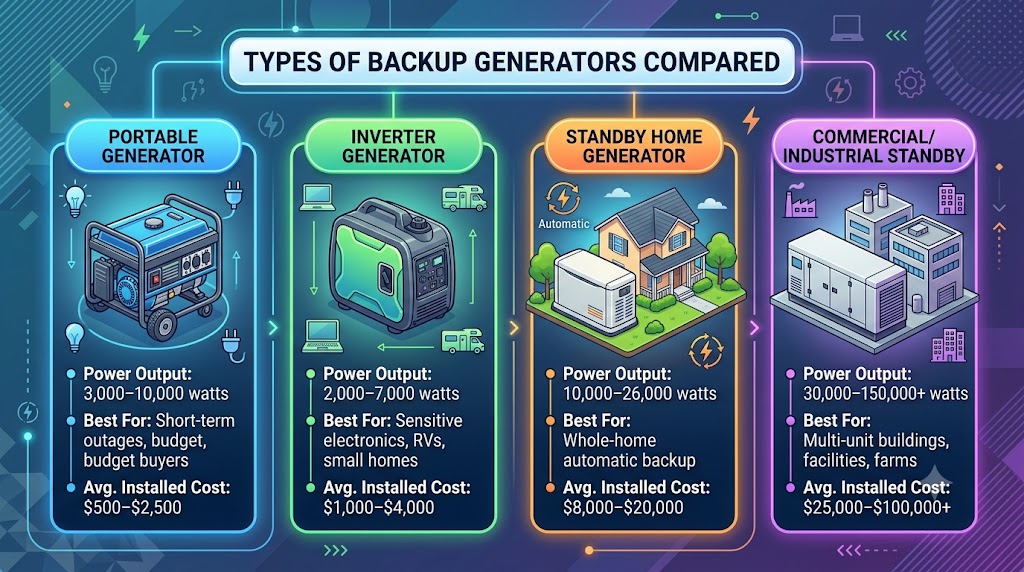
| Generator Type | Power Output | Best For | Avg. Installed Cost |
|---|---|---|---|
| Portable Generator | 3,000–10,000 watts | Short-term outages, budget buyers | $500–$2,500 |
| Inverter Generator | 2,000–7,000 watts | Sensitive electronics, RVs, small homes | $1,000–$4,000 |
| Standby Home Generator | 10,000–26,000 watts | Whole-home automatic backup | $8,000–$20,000 |
| Commercial/Industrial Standby | 30,000–150,000+ watts | Multi-unit buildings, facilities, farms | $25,000–$100,000+ |
Key Factors That Determine System Cost
- Home size and electrical load: Larger homes with central air, electric water heaters, and well pumps require higher kilowatt output.
- Fuel type: Natural gas units are typically cheaper to run long-term; propane systems offer more flexibility for rural properties without gas lines.
- Installation complexity: Trenching for gas lines, panel upgrades, and permitting can add $2,000–$6,000 to a project.
- Brand and warranty tier: Premium commercial-grade units with extended warranties and remote monitoring cost more upfront but reduce long-term maintenance risk.
- Local permitting and inspection fees: These vary significantly by state and municipality and should always be confirmed with a licensed electrical contractor before signing a contract.
Sizing Your Generator: A Practical Framework
Correct sizing is the single most important decision in this purchase. Undersized systems will trip breakers under load or fail to run essential circuits; oversized systems waste money on unnecessary capacity. As a general guideline:
- 7,500–10,000 watts covers essential circuits: refrigerator, sump pump, lighting, and a few outlets.
- 14,000–20,000 watts covers most mid-size homes including central air conditioning.
- 22,000+ watts is recommended for large homes, multi-family properties, or homes with electric heat and multiple HVAC zones.
A licensed electrician or generator dealer should always perform a formal load calculation before you finalize a purchase. This is typically offered as a free consultation by reputable installers and is the first step most commercial dealers require before providing a firm quote.
Residential vs. Commercial/Industrial Applications
While the residential market drives most search volume, the commercial and light-industrial segment represents significantly higher contract values. Property management companies, medical offices, cold storage facilities, farms, and multi-tenant buildings often require three-phase power systems, automatic load-shedding controls, and remote monitoring via cellular or Wi-Fi connectivity. These systems require engineering review, often involving a professional load study, utility coordination, and compliance with NFPA 110 standards for emergency and standby power systems. If you manage a commercial property, always request a site assessment from a commercial-rated dealer rather than a residential-only installer.
How to Choose a Generator Installer or Supplier
The generator itself is only half of the investment — installation quality determines reliability. When evaluating suppliers or contractors, consider the following checklist:
- Is the installer factory-certified by the generator manufacturer?
- Do they carry proper electrical and gas-fitting licenses for your state?
- Do they offer maintenance plans, and what is included (oil changes, battery checks, load tests)?
- What is the manufacturer’s warranty length, and does the installer honor it directly?
- Can they provide references or documented commercial installations similar to your property?
- Do they offer financing options for larger commercial systems?
Maintenance and Long-Term Ownership Costs
Standby generators require scheduled maintenance to remain reliable, typically twice per year. A standard maintenance visit includes oil and filter changes, battery testing, coolant checks, and a load-bank test to confirm the unit performs under real demand — not just at idle. Homeowners should budget $180–$450 per service visit, or consider a bundled annual maintenance contract, which many dealers offer at a discount. Neglecting maintenance is the leading cause of generator failure during an actual outage, so this is not an area to cut corners on, especially for commercial properties where downtime carries direct financial cost.
Financing and Insurance Considerations
Many suppliers now offer 0% or low-interest financing for standby generator systems, often through partnerships with home improvement lenders. Additionally, some homeowners insurance carriers offer premium discounts for permanently installed backup power systems, particularly in regions prone to hurricanes, ice storms, or wildfire-related grid shutoffs. It is worth requesting a quote comparison from at least three licensed dealers, as installed pricing for an equivalent unit can vary by thousands of dollars depending on region and contractor overhead.
Common Mistakes Homeowners Make When Buying a Generator
Even well-intentioned buyers frequently make avoidable errors during the generator purchase process. The most common mistake is accepting a sizing recommendation over the phone without an in-person or virtual load assessment — every home’s electrical panel, appliance mix, and HVAC configuration is different, and a generic “one-size-fits-most” recommendation often leads to an undersized system that trips under real-world load. A second common mistake is focusing exclusively on the sticker price of the generator unit while ignoring installation complexity; a cheaper unit paired with an expensive trenching or panel-upgrade requirement can end up costing more than a slightly pricier unit with a simpler installation. Homeowners should also avoid signing a contract that doesn’t clearly separate the manufacturer’s product warranty from the installer’s workmanship warranty, since these have different claims processes and coverage periods. Finally, skipping the maintenance contract to save money upfront is a false economy — generators that aren’t regularly serviced are significantly more likely to fail during the exact moment they’re needed most, during an actual power outage.
Regional and Climate Considerations
Generator selection and installation requirements vary meaningfully by region. In hurricane-prone coastal states, enclosures must often meet specific wind-load ratings, and homeowners frequently prioritize larger fuel reserves or dual-fuel capability given the potential for extended multi-day outages. In colder northern climates, cold-weather starting kits and battery warmers are important add-ons to ensure reliable startup during winter storm outages, which are often when backup power is needed most. Wildfire-prone western states have seen a rise in Public Safety Power Shutoff (PSPS) events, where utilities proactively cut power during high fire-risk conditions; homeowners in these areas increasingly pair generators with solar and battery storage for extended, fuel-independent backup coverage. Local permitting timelines also vary significantly — some counties process generator permits within days, while others, particularly in dense urban or historic districts, can take several weeks, which should be factored into your installation timeline expectations.
Commercial Property Load Management and NFPA 110 Compliance
For property managers and commercial building owners, generator systems supporting life-safety equipment, elevators, or emergency lighting are typically subject to NFPA 110 standards, which govern emergency and standby power systems. This includes requirements for weekly self-test cycles, documented maintenance logs, and specific transfer time thresholds depending on the equipment classification. Commercial-grade systems in this category often include automatic load-shedding controls, which intelligently prioritize critical circuits and shed non-essential load if the generator approaches its maximum capacity, preventing a system-wide overload during peak demand. Property managers should request documentation confirming NFPA 110 compliance as part of any commercial generator installation proposal, particularly for buildings with life-safety code obligations tied to their occupancy classification.
Reading a Generator Proposal Like a Professional
A detailed, trustworthy generator proposal should function as a technical document, not just a price quote. Look for the specific generator model number and its continuous (not just peak/surge) kilowatt rating, since continuous rating is what determines real-world sustained performance under load. The proposal should specify the transfer switch model, its amperage rating relative to your home’s electrical service size, and whether it includes load-management or load-shedding capability for larger systems. Fuel line sizing should be calculated based on the generator’s BTU demand and the distance from the meter or tank, since undersized gas lines are a common cause of underperformance in improperly designed installations. Finally, confirm the proposal explicitly states who pulls permits, who schedules inspections, and what happens if the local inspector requires modifications after initial installation — ambiguity on these points is a common source of disputes and delays after a contract is signed.
Frequently Asked Questions
How long does a whole-house generator last?
Most standby generators are rated for 20–40 years of use with proper maintenance, though the engine components typically require overhaul or replacement after 10,000–30,000 hours of run time.
Can a whole-house generator run my entire home during a long outage?
Yes, provided it was sized correctly for your home’s total electrical load. Extended outages of several days or weeks are well within the design capability of a properly sized and maintained standby system.
Do I need a permit to install a standby generator?
Almost universally, yes. Most municipalities require electrical and gas permits, and some require a setback distance from windows, doors, and property lines. A qualified installer will handle this process for you.
What is the difference between a residential and commercial-grade generator?
Commercial-grade units are built for higher duty cycles, often feature liquid-cooled engines instead of air-cooled, and include more advanced control panels for load management and remote diagnostics.
How much does it cost to run a standby generator during an outage?
Natural gas units typically cost $2–$5 per hour to run at moderate load, while propane units run somewhat higher depending on regional fuel prices.
Should I choose natural gas or propane for my generator?
Natural gas offers unlimited fuel supply as long as the utility line remains intact and gas service isn’t interrupted, while propane requires an on-site tank but isn’t dependent on a piped utility connection, which some homeowners view as an advantage during infrastructure-wide disaster events. Rural properties without natural gas access typically default to propane.
Can I install a generator myself to save money?
This is strongly discouraged and, in most jurisdictions, illegal without proper licensing. Standby generator installation involves gas line work, high-voltage electrical connections, and automatic transfer switch wiring that must be performed by licensed professionals to meet code and to keep manufacturer warranties valid.
Get Matched With Licensed Generator Installers Near You
Before signing any contract, it’s worth requesting itemized, side-by-side quotes so you can compare not just the sticker price of the generator unit but the full scope of the installation package: trenching, panel work, permitting fees, and the terms of the first-year maintenance visit. A well-documented proposal should specify the generator’s exact kilowatt rating, the transfer switch model and amperage capacity, and the estimated timeline from signed contract to final inspection sign-off. Reputable installers are generally happy to walk through this documentation in detail and answer specific technical questions before you commit, and a contractor who is reluctant to provide this level of detail is often a signal to keep shopping.
Choosing the right system and installer is the difference between a generator that performs flawlessly for two decades and one that fails when you need it most. Request quotes from multiple certified dealers, compare warranty terms, and confirm commercial-grade options if you manage a multi-unit or business property. This article may contain affiliate links to vetted generator suppliers and contractor-matching services; we may earn a commission if you request a quote through these links, at no additional cost to you.
Advertisement